
This text was sent on April 17, 2022 to the subscribers to our private emails “L’actu de l’acteur “, which you can join at the end of the page.
To go directly to your favorite section, you can scroll down the table of contents at the top of the page.
This article contains affiliate links. Principonauts may receive financial support from purchases (at the same price) made using these links.
📧 Many of you ask us how to practise on your own before, during, or after joining our programme.
👇 So here are a few leads you can make your own for free and without waiting if you want to explore some of these tools, and see whether this direction of work suits you.

🧭 Get the goal right
⚠️ First of all, it is always worth asking what kind of actor you want to become, and why. As a reminder, here are our criteria for choosing acting techniques, approaches to those techniques, and related tools:
1️⃣ develop a way of acting that is interesting to watch for the audience,
👉 less like a technical performance where you tell yourself there’s a good actor in front of you,
👉 more like something that touches us, humanly, and makes us forget that someone is "acting";
2️⃣ make your own a skill that is reproducible,
👉 without having to do it the exact same way every single time,
👉 one that lets us start again, take after take, performance after performance,
👉 while being able to assess what to "do" at each moment, how to make choices, translate directions, and commit to this technique "consciously",
👉 so as to learn, at the very least, and progress a bit more each time;
👉 without exhausting, destroying or losing ourselves,
3️⃣ the corollary of this second principle: have an approach that is healthy psychologically.
👉 No clenching onto old traumas to produce emotions (which would anyway create an introverted self-indulgence the audience tires of),
👉 no "forcing" yourself, or being forced by a director, stage director or teacher, into becoming "vulnerable" by feeling a little traumatised along the way,
👉 and so avoid losing your self-confidence and self-esteem, and feeling that a state of enormous, somewhat brutal openness is always necessary to act well,
👉 or avoid feeling that this kind of state or psychological disposition is "enough", whatever the scene, the script, and the outside demands.
💡 Exploring on your own
👤 There are many approaches linked to an "organic" personal exploration, better self-knowledge, greater availability, creativity, access to your emotions, your impulses, and your points of view.
👩🔬 Some of these tools have been researched by therapists, evaluated in terms of short, medium and long-term consequences by scientific studies, demystified, debated… and they are far from all equal.
🧙♀️ Some of these systems offer concepts that are more or less "real", tangible and "actionable", which let you build a solid skill, and others less so.
⚔️ Finally, some of these analytical grids or tools are complementary and enrich one another, while others seem inconsistent, and exploring them at the same time can be counter-productive.
🤓 For my part, after taking an interest in and training in various therapy and coaching tools, and while continuing to train in them, I was particularly struck by the diversity of approaches to the "Meisner technique" around the world and from one teacher to the next.
🧐 While I sensed each time the extraordinary potential of this very beautiful approach to acting, I was quite frustrated to be working, in different classes, in ways that seemed contradictory to me, before understanding how they could be complementary.
📚 The “Meisner & systemic coaching” programme is the outcome of these questions and this research, but it also keeps evolving.
🕊 I imagine that for you too, nothing is ever completely set in stone, and without this ongoing exploration many actors would tire of their practice, which would become too predictable and counter-productive. Beyond techniques, it seems to me that everyone has to make this personal exploration their own, without leaning on gurus, overly strict approaches, dogmas or authorities, in these fields that are little and poorly known, and forever evolving.
📝 Writing
🥇 One of the best ways to clarify what you think, but also what you feel, is to write.
🕸 Writing lets you explore and clarify, but also save, and map.
🧑💻 Building a daily writing habit (sometimes called "journaling") is essential for the actor.
🏗 Combined with a system of acting and self-understanding that is clear enough, it also makes it very easy to go and fetch references, imaginary circumstances, emotional triggers, people and values that touch us… while benefiting from the gradual additions we make to it every day.
💻 These writing systems and useful apps for mapping and reusing this raw material for acting are an integral part of our programme, step by step, but any daily writing practice is useful, and can be reviewed and reused if you later want to work our way, especially if you write on a computer (I love writing by hand too, but writing on a computer allows a speed of note-taking and of reusing your notes that handwriting unfortunately doesn’t).
🏝 Since the writing exercise is an exercise in self-exploration, as with the actor’s work we want to undertake it honestly and courageously, yes, but also calmly, without forcing.
💬 Keeping in mind, for instance, the quote from Rainer Maria Rilke, in the Letters to a Young Poet :
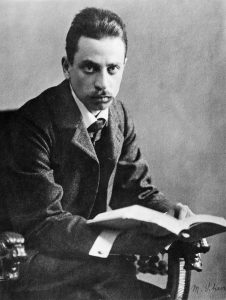
"I would like to beg you, as much as I know how, to be patient in front of everything that is not resolved in your heart. Strive to love your questions themselves, each one like a room that is closed to you, like a book written in a foreign language. Do not look for answers that cannot be given to you at this time, because you would not know how to put them into practice, to "live" them. And it is precisely a question of living everything. Live for the moment only your questions."
💬 Telling the truth
💡 Some approaches to the Meisner technique, in the repetition exercise, talk about “Points of view”.
🙊 It means telling your partner what you think, in the present moment and without anticipating.
🗣 Unfortunately, many teachers condition their students, sometimes unconsciously, to get agitated, angry, or into caricatured situations to "make themselves interesting" in a rather superficial way, instead of taking the time to explore what "emerges" (as they say in Gestalt) between two people, and thus go much further in the work, instead of "playing an idea" of the interaction (in repetition) and then of the scene (when approaching the text).
📲 This deeper, healthier and richer kind of exploration is illustrated by the quote from the book Radical Honesty by Brad Blanton, as quoted in the caption of this post on our Instagram account.
🏫 More generally, taking the time to explore, accept, and then share your truth, in life, out loud or in writing, is liberating for the actor, as Sanford Meisner sensed.
🎭 "The ability to live truthfully under given imaginary circumstances" (Meisner’s first definition of acting) presupposes learning to live truthfully, instead of spending your time lying, cheating, repressing, deflecting… and then trying to add a mask on top of a mask, a character on top of a character, when we act.
🧘♂️ Meditating
🤔 There are many forms of meditation, more or less interesting for each person, more or less useful for the actor, and more or less aligned with the various approaches to acting.
👁 The essence of any meditation technique worth the name, from our point of view, is that of awareness (as they say, again, in Gestalt) of what is happening, and of acceptance, without judging, blocking or controlling the processes that emerge.
🚏 Different types of meditation, like different acting techniques, produce different effects.
🎁 Besides psychologically stabilising the actor who practises it, meditation can also bring very useful personal revelations, in general of course, but also every day and at every moment, in life as in acting.
👨🏫 Without going here into the details of the various techniques and what is at stake in each, the one that seems to me most useful for exploring the mind-body link, and for stabilising psychologically without repressing or "masking" yourself any further, is Vipassana meditation.
👉 You can, for instance, learn this technique for free following the approach of S. N. Goenka on Dhamma.org.
⚠️ A word of caution: this approach is very strict, even slightly dogmatic for those who practise nothing else, but I trust you to get the most out of a 10-day silent retreat, where you will be housed and fed for free on top of learning this beautiful technique, which you can then make your own by meditating daily, for instance.
📔 Ideally, experience this technique in practice first of all, but if you like you can have a look at this book gathering the discourses of S. N. Goenka.
So as not to write an even longer text than this one already is, I’ll let you explore these first leads and come back to me if you have questions or particular requests.
Among other things, feel free to tell me whether some types of content would interest you more than others among our programmes and our research.
🕰 As a reminder, there are a few places left in our last term of 9 classes before the summer holidays, if you want a first taste of this work.
Access to this programme will also let you rehearse with all your classmates from every group, since everyone keeps practising the fundamental exercises together.
It will also give you access to the online resources and discussion groups linked to this programme on our community space.
Wishing you an excellent Easter weekend,
All the best,
Octave